.svg)

_converted.webp)
For the first six months, every ad in ChatGPT looked the same: a card below the answer with a headline, a short description, an image, and a link. By October 2026, there are five formats, and two of them look very little like traditional advertising.
Below, we walk through each format, where it is available, and which one fits your goal.
All ChatGPT ad formats at a glance
Outside the US, advertisers currently have two working tools: chat cards and product ads.
Chat cards: the core format
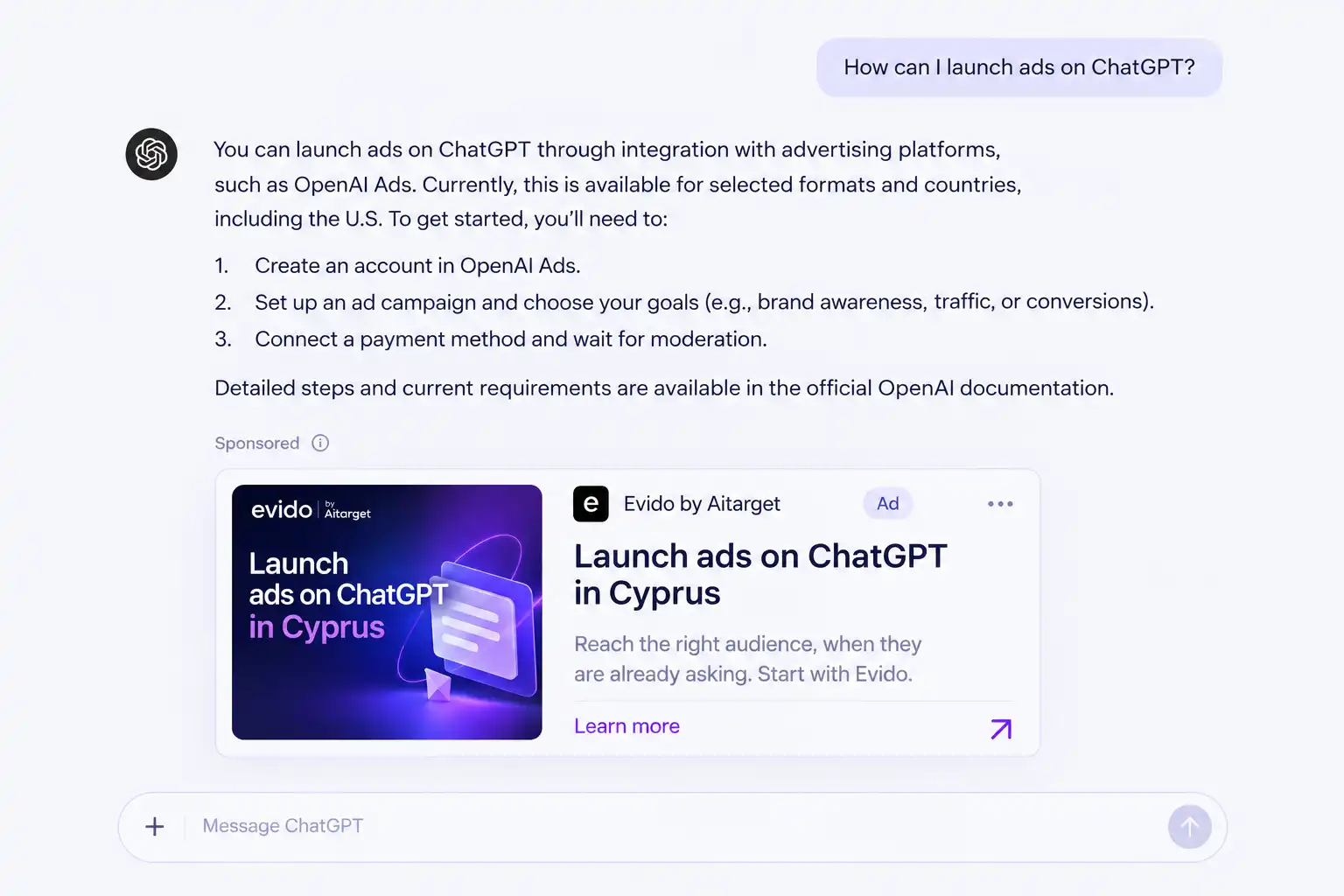
A chat card appears below the ChatGPT answer and is labeled as sponsored. The advertiser name and logo sit above it, followed by a headline, a description, an image, and a link.
With 150 characters for the headline and description combined, you have room for one idea. What works is a specific offer for a specific situation in the conversation.
Weak headline: "The best CRM for your business."
Stronger: "CRM for sales teams of up to 20" with the description "We move your data from Excel in one day. Free for 14 days."
The second version answers the question the user brought to ChatGPT. The first one could run anywhere.
Since September 2026, Ads Manager suggests copy and images based on your landing page and campaign objective. Advertisers review and edit the suggestions before launch. There is also an optional text customization setting: the system adapts the headline and description to the conversation and translates them into the user's language. It is off by default. If you turn it on, check your ad previews regularly.
Character limits, image requirements, and the most common rejection reasons are covered in the article "ChatGPT Ad creative".
Product feed
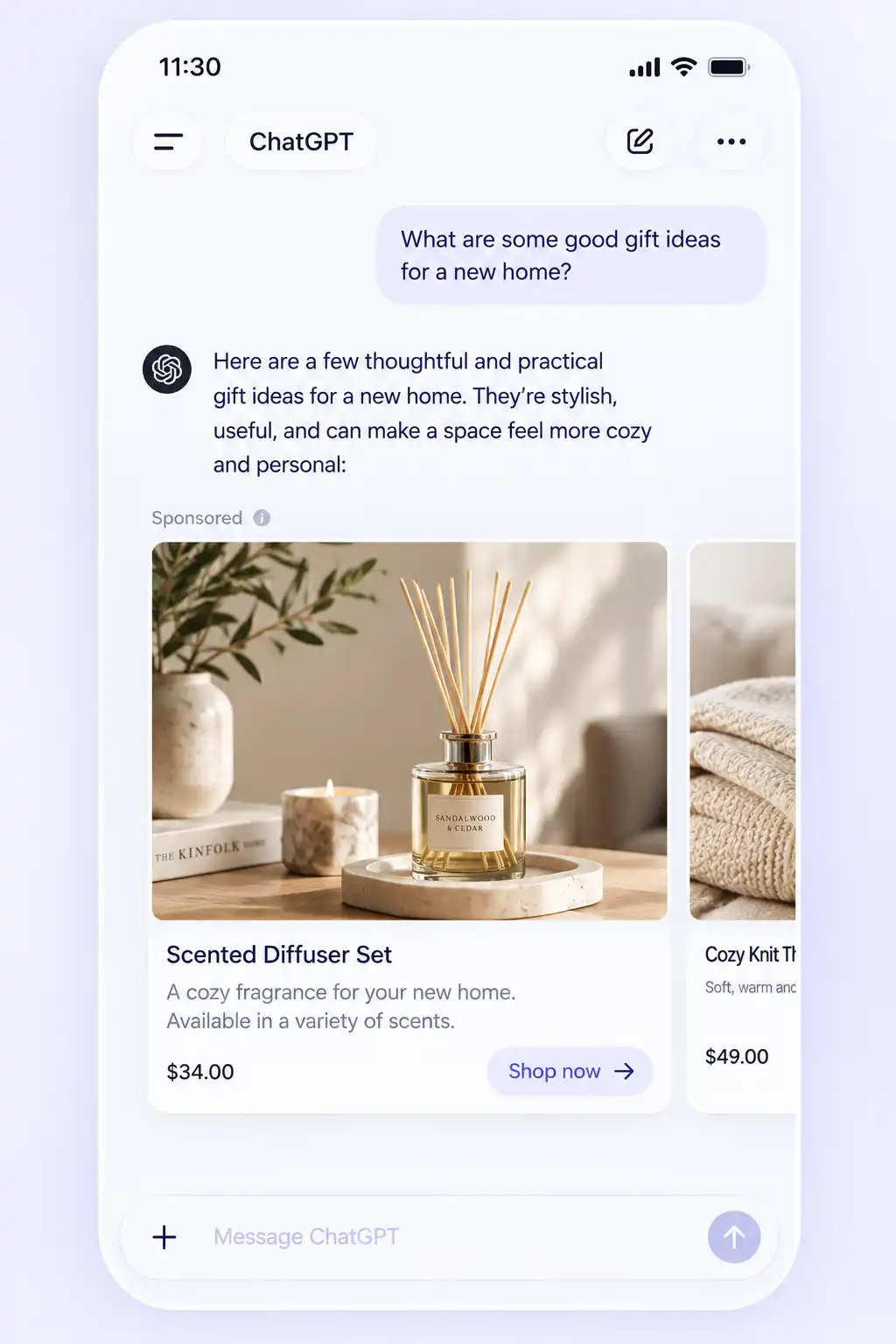
For online stores, ads are built from the catalog. You upload a product feed, choose which products an ad group can show, and create a single template. The template has fields for the brand, product name, description, and price, while the image and link come from the feed.
One template covers thousands of products. The system decides which product to show in each conversation.
Since August 2026, product feed campaigns can also appear as a carousel: several products from one seller in a single unit. The platform decides whether to show a single card or a carousel. Impressions and clicks on individual carousel cards appear in reporting but are not billed.
Find more about product feed campaigns in ChatGPT in the article "How to promote your product catalog in ChatGPT".
Visual ads next to image generation

On October 5, 2026, OpenAI announced a visual ad format. Ads appear next to the images users ask ChatGPT to generate. Testing starts in the US in late October with an initial group of advertisers.
The ads are labeled and kept separate from the generated image. They do not affect the image itself.
The logic is easy to follow. A prompt like "generate a Scandinavian-style living room" is a moment when someone is picturing a furniture purchase. "An outfit for a summer wedding" is a moment of choosing clothes. A brand with strong visuals gets in front of the user at exactly that point.
What is still unknown: buying terms, targeting, pricing, and launch dates outside the US. OpenAI has not published them yet. If you work in fashion, home and interior, or travel, it makes sense to start building a library of product images in real-life settings now. You will need it when the format opens up more widely.
Sponsored Agents: ads you can talk to

On September 16, 2026, OpenAI started testing Sponsored Agents. After clicking an ad, the user can start a separate conversation with the company's agent. The conversation is labeled as sponsored and kept apart from ChatGPT's answers and from the user's original chat.
OpenAI's own example: someone sees an ad for a dining table and asks the agent whether it will fit their room, how many people it seats, and how to care for the finish. Then they go to the store's website.
The company only sees the messages the user sends to its agent. The rest of the user's ChatGPT conversations stay private.
The test is running in the US with select advertisers. Google introduced a similar format for AI Mode in May 2026: Business Agent for Leads, a brand agent that replaces the lead form. Ads in AI assistants are moving toward consultation. The companies that benefit will be those that already have their FAQs, specs, and delivery terms organized in one place.
Which format to choose
The rule is simple: the format follows the moment in the conversation. Someone comparing CRMs needs a card with a clear differentiator. Someone shopping for sneakers needs a product with a price. Someone generating an interior needs an image.
What to do next
New ChatGPT ad formats appear almost every month, and most reach markets outside the US with a delay. So the plan for the next quarter is straightforward: launch what is available now and prepare assets for what is still in testing.
Evido by Aitarget helps you access advertising opportunities in ChatGPT Ads whether your market is open or not. Ready to get started? Get in touch.

.jpg)
_converted.webp)